


Sage and Rosemary Healing Salve
This recipe for homemade sage and rosemary salve is so easy and makes a delightful salve that can be used to sooth, heal and moisturize your skin.
This recipe for how to make sage and rosemary salve is an easy-to-make useful herbal salve. Making salves from herbs and other medicinal plants and weeds is a fun beneficial activity. This salve made from sage and rosemary has many possible benefits. It is amazing what wonderful properties that herbs really have.
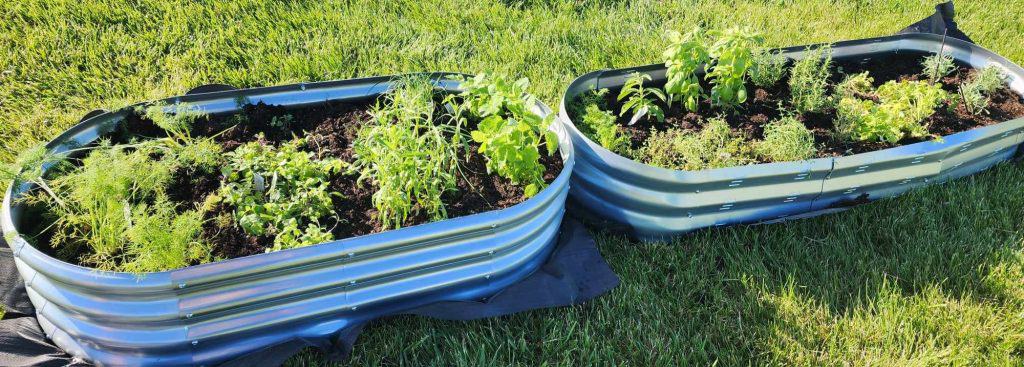
You can grow herbs pretty easily. Especially sage and rosemary Here are pictures of my outdoor herb garden that I planted in 2 raised beds from Amazon. I loved this raised bed, it was very easy to put together, which was great!
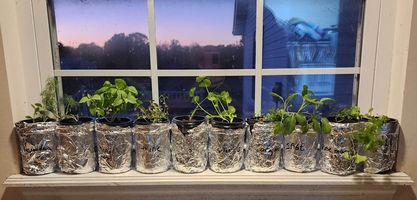
I have also grown herbs inside in my mason jar hydroponic herb garden. Click on the link to see step by step instructions! It worked great to grow herbs using this technique!
My actual sage plant is huge. I have it in a separate wishing well planter and it comes back bigger every year.

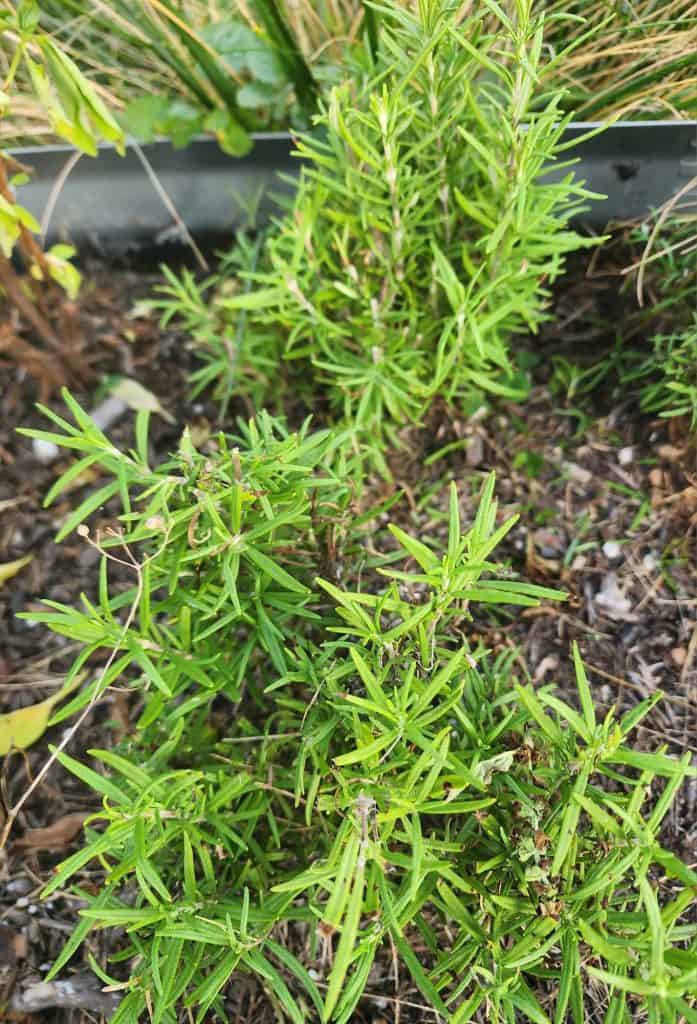
My rosemary is growing in my raised garden I showed above.
Benefits of Sage for the Skin
This article describes the many benefits of sage for the skin.
As discussed in the article, sage is good for relieving several skin conditions, such as chapped skin, acne, eczema and psoriasis. The oil from sage has an astringent property and is often added to face and body washes. The article also discusses that sage can possibly improve skin’s appearance by stimulating cell renewal and increasing blood circulation and that the herb is rich in calcium and vitamin A needed for daily cell regeneration and can delay the onset of wrinkles! Sage can also possibly improve the appearance of varicose veins and can reduce cellulite. Sage can also be used for wound treatment and can possibly reduce UVA damage to the skin.
Benefits of Rosemary for the Skin
Rosemary is known to potentially have several health and skin benefits. This article from Healthline discusses that rosemary oil may reduce joint inflammation, pain relief, relieve dry skin and other skin conditions, increase circulation and repel certain bugs.
Rosemary is a versatile herb with many possible positive effects on the skin, which is why it is an ingredient in many creams and salves.
How to Make Sage and Rosemary Salve
To make salves, balms, lotions and lotion bars, you need to start with an infused oil.
How to Make an Infused Oil
To make the sage and rosemary salve infused oil, the first step is to pick the sage and rosemary leaves.
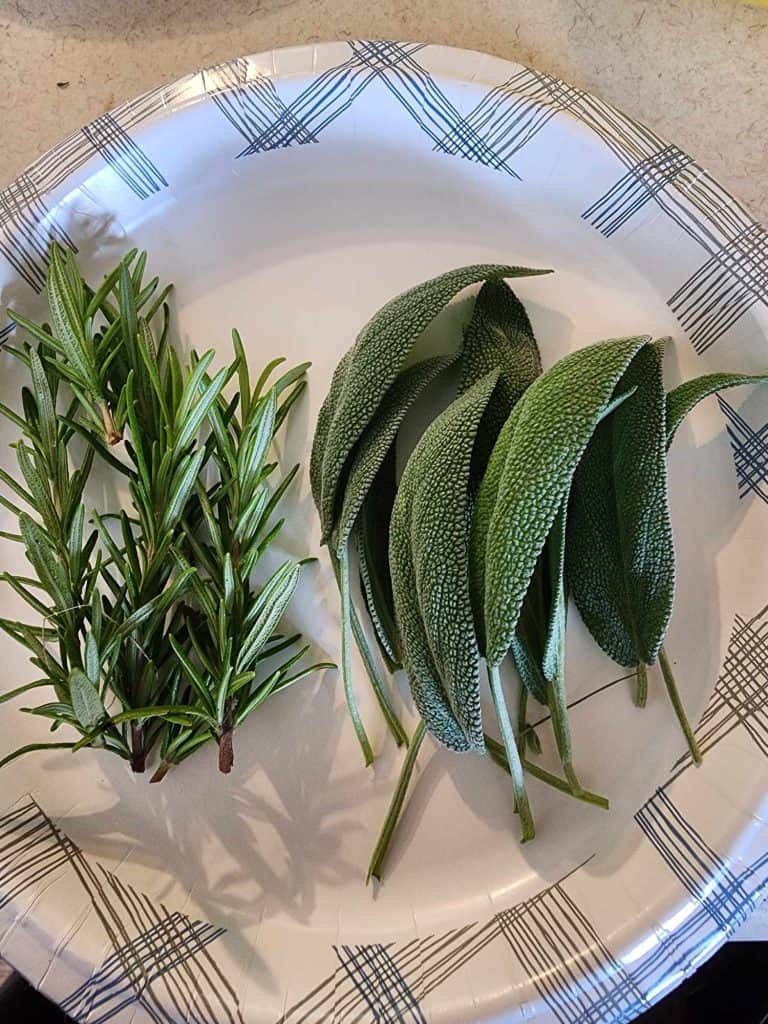
The second step to make an oil infusion is to dry the herbs. You can let the plants air dry by spreading them in a single layer on a dish towel or paper towel and let them dry for several days. The other option is to use a dehydrator set at a low setting.

The next step for the diy sage and rosemary salve is to make an infused oil with the leaves by steeping the dried herbs in a carrier oil over a period of time. As the dried herbs infuse in the oil (later strained), the natural essential oils in the leaves are drawn out and into the carrier oil. Different kinds of oils can be used including sweet almond oil, safflower oil, avocado oil, sweetgrass oil, olive oil, sunflower oil, jojoba oil or coconut oil.
Add the dried sage and rosemary to a glass jar. I like to use a pint mason jar.

The amount of oil you want will depend on how much salve or other items that you want to make. You will add about twice as much oil as your dried flowers or herbs. For example, you can add the flowers or herbs to a pint jar about halfway and then fill the jar almost to the top. If you want less, you can fill the jar about 1/4 up with herbs and then 1/2 way with oil. Also, you can make more than you plan to use for now and save the additional oil for later.

There are several options for making the oil infusion:
Slow infusion method: Just add the lid to the jar and put it away in a dark place for 4 to 6 weeks. Shake the jar every once in a while. You can also put the jar in direct sunlight for a couple weeks to infuse the oil.
Fast double boiler method: Place the jar in a saucepan of a couple inches of hot water and heat the water on low for about 2 hours. Or add the oil and dried herbs or flowers to a double boiler pan and let it simmer but not boil for 1 to 2 hours.
Fast crockpot method: Add your dried herbs or flowers and oil to the crockpot, make sure that the oil covers the herbs. Heat the oil slowly and keep the crockpot on warm. Try to keep the temp between 120-130 F. Let it heat for several hours.
Making the Sage and Rosemary Salve
The next step to follow these easy instructions to make the homemade sage and rosemary salve. First, strain the dried sage and rosemary from the infused sage and rosemary oil.
Once you have the strained sage and rosemary oil-infusion, add the desired amount to a double boiler, with a small saucepan, then add the beeswax and shea butter. My measurements are 1 cup infusion oil to 2 Tbsp. beeswax and 1 Tbsp. shea butter. I used 1/2 cup infusion oil to 1 Tbsp. beeswax and 1/2 Tbsp. shea butter for the sage and rosemary salve to make a smaller batch. It made 2 2-oz tins. A lot of recipes for salves that I have seen use measurements in grams and oz. I feel it is easier with simple measurements and the salve turned out great.
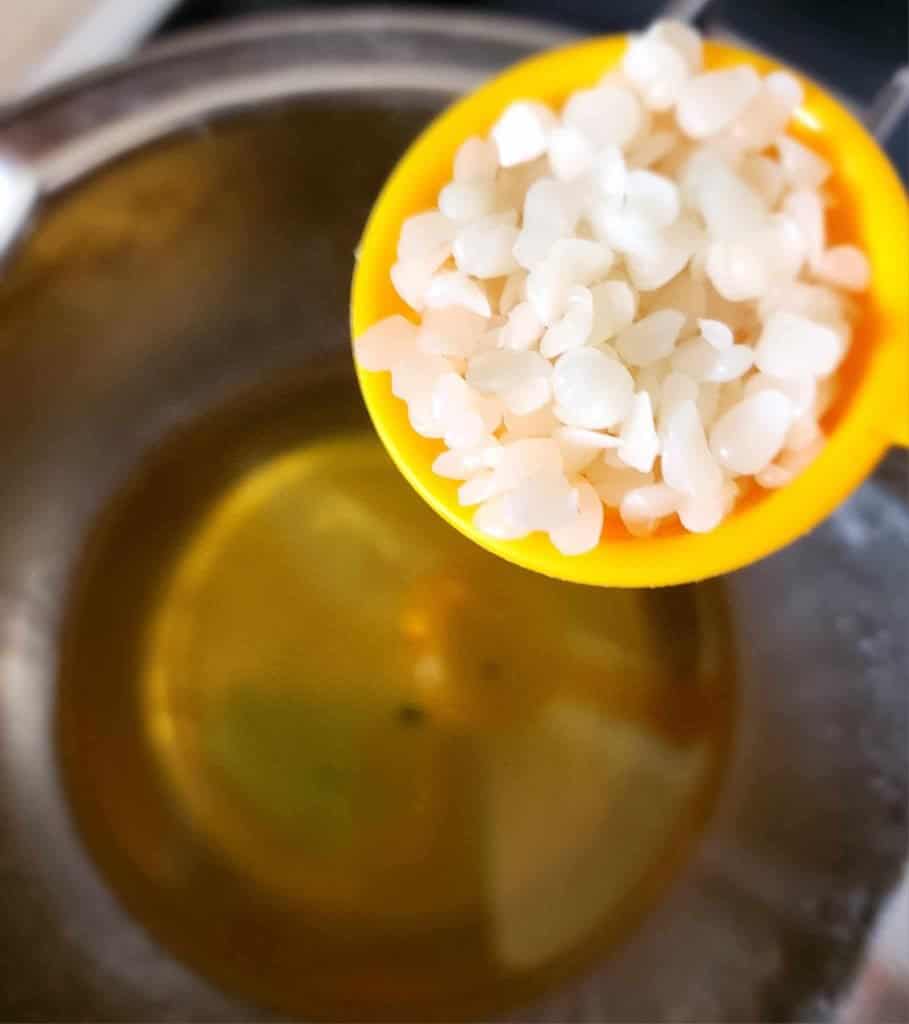
Stir until the beeswax pellets and shea butter melt.
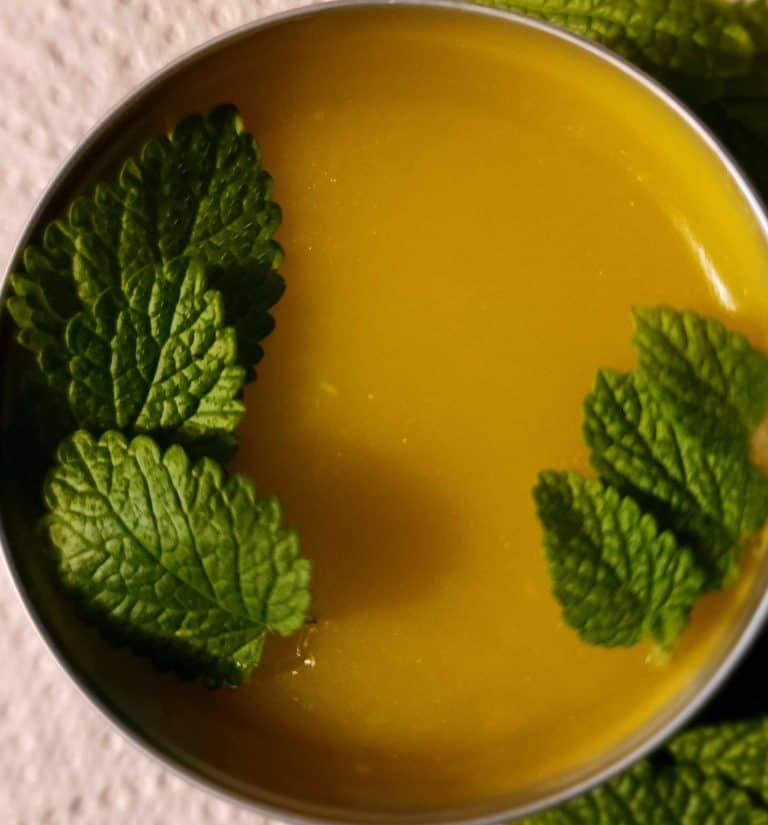
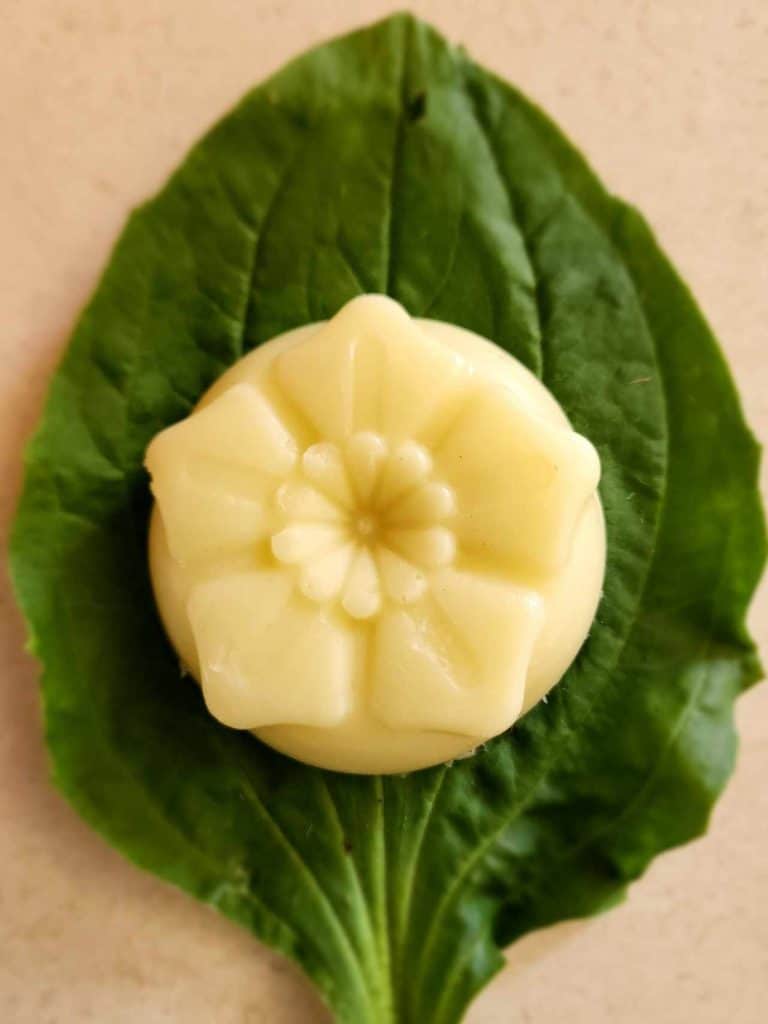
When the beeswax and shea butter are melted, pour the mixture, which will be in liquid form, into 2 2- ounce tins or 2 ounce jars. Option is to add essential oils or scents and also to add mica powder for color. I did add some green colored mica powder to my oil.

Let the salve set and set up. It does not take very long for it to harden.

Enjoy!
Enjoy making and using your own sage and rosemary salve made from natural ingredients. It is very easy to make small batches of these salves from simple ingredients. The wonderful healing salve would also make a lovely gift!

I have made many other flower and herbal homemade salves including salve from purple nettle, salve made from lavender, honeysuckle salve and a salve made from sage and also peony salve, elderflower salve, white clover salve, yarrow salve and lilac salve from flowers. I have also made some flower and herbal lotion bars including lotion bars from rose petals and lotion bars from sage, lilac and peony.
See my website at www.HawkPointHomestead.com to learn more and for additional made from nature recipes, such as my flower jellies including my dandelion jelly recipe, redbud jelly recipe, lilac jelly recipe peony jelly and apple blossom recipe.
The website also includes canning recipes and other favorite great recipes, plus posts about other homestead-type activities, such as gardening and raising chickens.
For updates, please follow my Facebook page at Hawk Point Hobby Homestead.
Disclaimer: This blog is for informational purposes only. It should not be seen as medical or any other advice. I am not a medical expert so individual precautions should be considered.
Some links are affiliate links, which means I make a small commission at no extra cost to you.

Sage and Rosemary Salve Recipe
This homemade natural sage and rosemary salve recipe is so easy to make and results in a salve with many healing properties.
Ingredients
- Dried sage and rosemary leaves and Carrier Oil, which can include sweet almond oil, coconut oil, sunflower oil, or olive oil, to make your infused oil (methods to make infused oil is included in the article above)
- 1 cup of the infused oil
- 2 Tbsp. beeswax
- 1 Tbsp. shea butter
- Optional: Essential oil of your choice
- Optional: Mica Powder for Color
Instructions
- Create the sage and rosemary infused oil with the dried sage and rosemary leaves and the carrier oil- See Notes: Detailed instructions for making an infused oil are included in the article with this recipe
- Heat the infused oil in a double boiler
- Add the beeswax and shea butter
- Heat and stir until the beeswax and shea butter are completely melted
- Pour the liquid into 2 oz tins or jars
- Optional: Add essential oil of your choice, Add mica powder for color
- Let the salve set up
Notes
There are several methods for creating the infused oil which are described in the article.
This recipe makes 4 2-oz tins. I cut the recipe in half and made 2 2 -oz tins.


Does it matter what kind of sage? I have Mexican sage, would that work?
I do not know much about Mexican sage. I tried to look it up to see if it has skin benefits, but I could not find much information. I’m sorry! You could just use the rosemary if you have that.
Can you use fresh sage & rosemary?
It is best to use dried herbs for making infused oils so mold does not occur.